Introduction
The controversies that dominate American public life often appear to be separate disputes. Debates about sexuality, race, identity, religious authority, and political power seem to arise from different constituencies and require different answers. Yet beneath them lies a common philosophical question: Is truth something the mind discovers by conforming itself to reality, or is truth produced within a historical struggle over language, institutions, and power? The answer determines far more than one’s theory of knowledge. It shapes how a person reads Scripture, understands the human person and identity, evaluates moral claims, and decides whether disagreement should be answered through persuasion or political coercion.
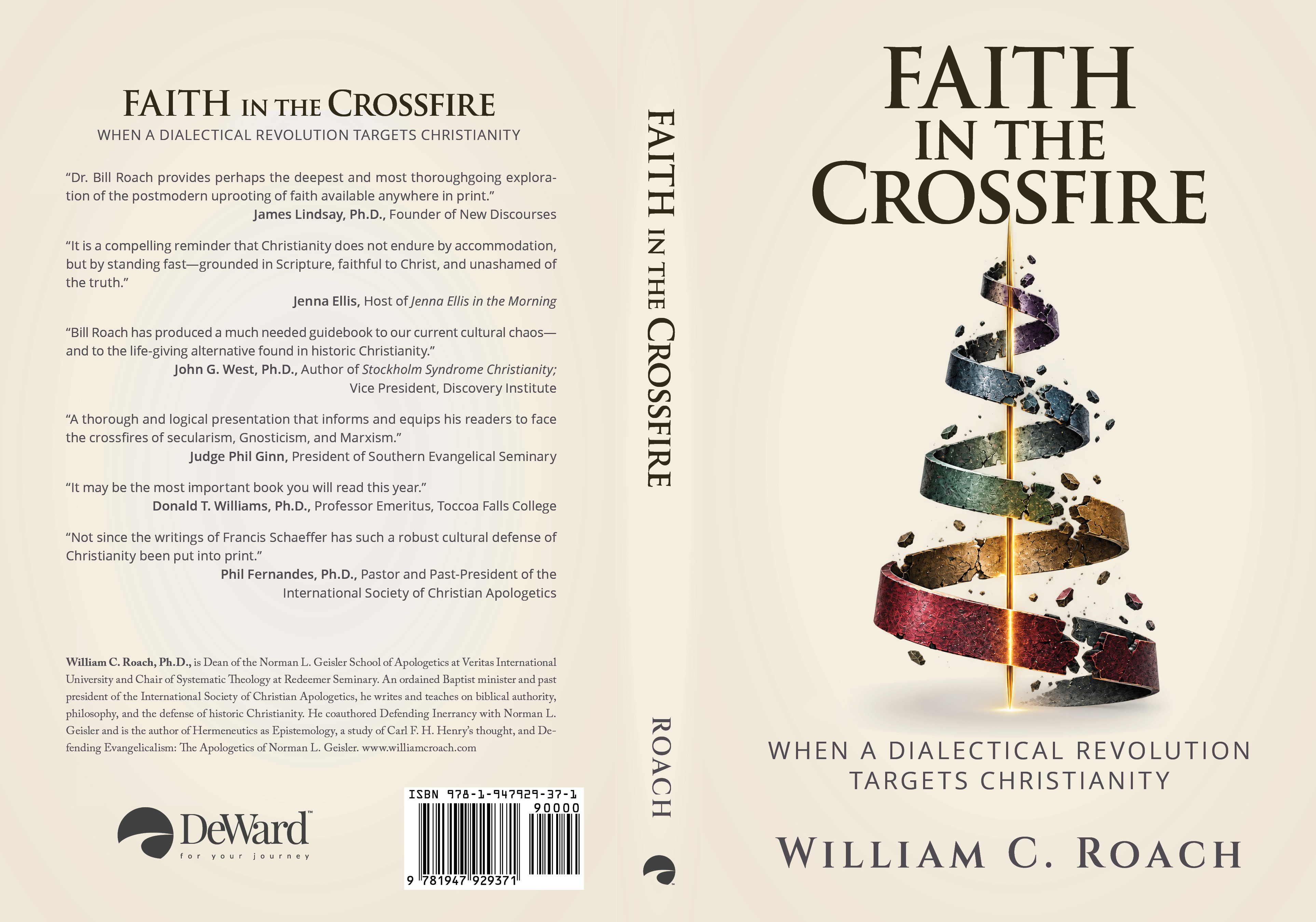
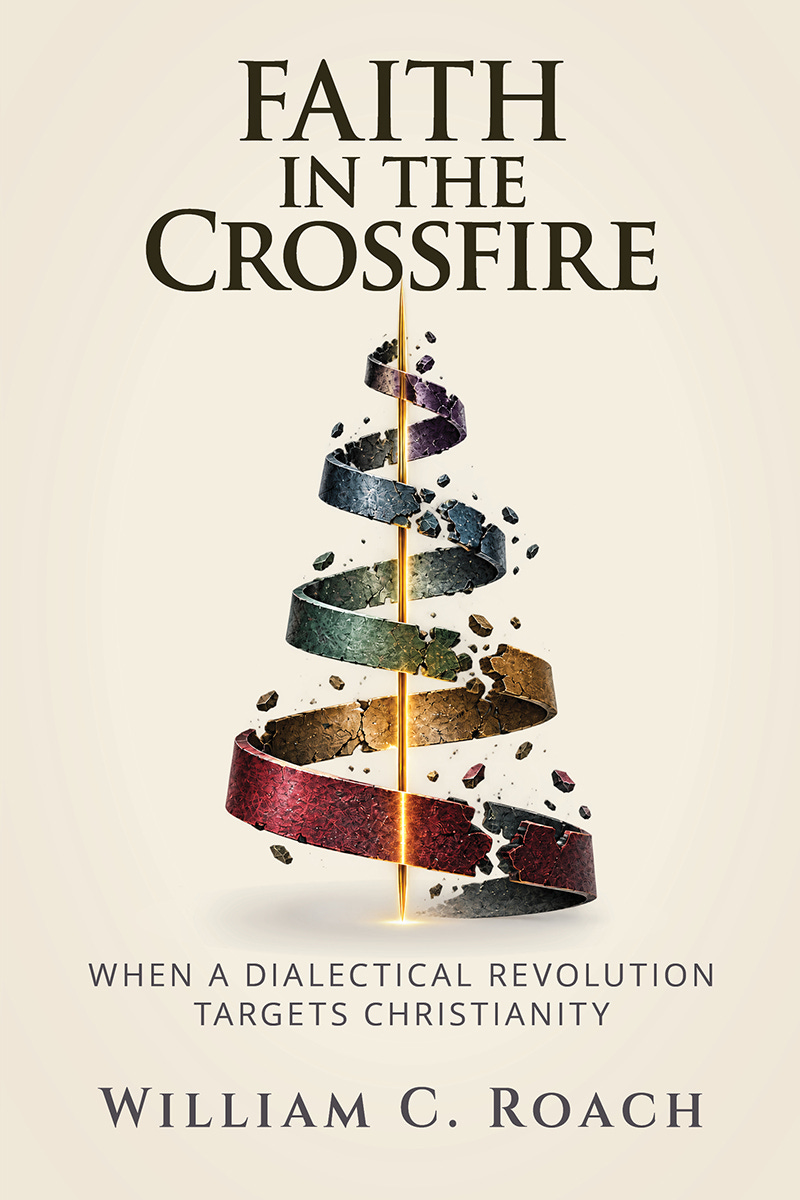
This conflict stands at the center of my new book, Faith in the Crossfire: When a Dialectical Revolution Targets Christianity. In the first half of the book, I trace a line of development through Gnostic and Hermetic themes, Hegelian philosophy, modern and contemporary hermeneutical theories, Marxist theory, modern theology, and contemporary identity politics. I argue that these movements differ in important respects, but share patterns of thought that elevate hidden knowledge, contradiction, negation, historical development, and transformative praxis. The second half offers a constructive Christian alternative grounded in Classical Realism, the first principles of reason, objective divine revelation, and the eternal Logos. The book is therefore both a diagnosis of our present confusion and an argument for the recovery of the historic Christian faith.
Truth and the Order of Reality
The correspondence theory of truth begins with a claim so basic that it is easily overlooked: our judgments are true when they affirm reality as reality actually is. Aristotle expressed the point by observing that to say of what is that it is, and of what is not that it is not, is true. The truth of a proposition does not arise from its popularity, psychological usefulness, racial identity, or political consequences. If a chair is brown, the proposition “the chair is brown” is true because what it affirms corresponds to the object under consideration. A coherent account of something can still be false, just as an unpopular judgment can still be true. Therefore, truth must seek something beyond coherence, and yet not less than coherence. In brief, truth must seek correspondence with reality.
The correspondence theory of truth does not require exhaustive knowledge or an infallible interpreter. Human judgments are often partial, and they are sometimes mistaken. The possibility of error, however, presupposes a reality about which we can be wrong. A map can misrepresent a city only because the streets possess an actual arrangement that the map either represents accurately or fails to represent accurately. In the same way, disagreement about morality, history, theology, or the natural world presupposes that there is something to know. If there were no reality independent of our interpretations, there would be no difference between interpretation and invention. Also, if there were no reality independent of our interpretations, there would only be power struggles between dominant groups to determine which view can “will to power” its prominence in society.
Classical Realism develops this insight about knowledge and reality by insisting that being precedes knowing. The mind encounters a world that already exists and possesses an intelligible order. Reality is not produced by consciousness, language, social status, perspectives on an intersectional spectrum, or political power. In the Classical Realist formulation (held by noted figures such as Aristotle, Aquinas, Adler, and Gilson), truth is the conformity of the intellect to reality (i.e., adaequatio intellectus ad rem). This conviction supplies the foundation for meaningful disagreement. Two contradictory claims about the same subject in the same respect cannot both be true; therefore, evidence, proper definitions, and reasoning matter in our approach to knowledge. Once that common reference point is removed, disputes and arguments become less an effort to discover truth than a contest over who possesses the authority to impose a description of the world.
This account also requires a careful distinction between Classical Realism and Critical Realism. Both ordinarily affirm that a real world exists independently of the mind and that human beings can possess genuine knowledge of it. Critical Realism should not be confused with relativism, postmodernism, or Critical Theory, since many critical realists defend objective truth and some form of correspondence. The difference concerns the starting point and the degree of mediation involved in knowledge. Classical Realism begins with being and maintains that the intellect genuinely knows the real thing through its intelligible form. Critical Realism begins more self-consciously with the knowing process and emphasizes the cognitive operations, such as language, conceptual frameworks, historical circumstances, and interpretive judgments through which knowledge is acquired. Its purpose is to preserve realism while accounting for human finitude and fallibility.
That critical emphasis can be valuable, but it also carries a danger. If the mediating structures become so prominent that the mind appears to know only its interpretations or representations, reality itself recedes from view. Truth may then shift from conformity with being toward coherence within an interpretive framework. Classical Realism resists that movement by insisting that interpretation remains answerable to what exists. The mind does not manufacture its object of knowledge. It receives and understands a reality that was already there.
From Correspondence to Dialectic
The term dialectic has carried several meanings throughout intellectual history, and not every use of the term dialectic is objectionable. My concern is with systems that make contradiction, negation, and historical conflict the mechanisms by which truth and reality develop. In the Hegelian tradition, truth is understood through a historical process in which tensions are taken up and overcome within a higher development. Marx relocates that movement into material and class struggle. Later critical theories analyze institutions, morality, language, and knowledge through conflicts between oppressor and oppressed. Within this framework, a truth claim is rarely evaluated only by asking whether it corresponds to reality. The critic also asks whose interests it serves, which structures it reinforces, and whether it advances the work of liberation.
The result is a significant change in the function of reason. Logic is no longer received simply as an expression of the stable structure of being. It is interpreted through history, culture, identity, and power. Contradictions may be tolerated because tension is believed to drive transformation, while every present settlement remains vulnerable to future negation and reconstruction. This does not mean that every thinker influenced by dialectical traditions denies ordinary facts. Such a claim would be a caricature. The deeper disagreement concerns the governing framework within which facts are interpreted. Correspondence asks whether a claim conforms to what is. Revolutionary dialectic tends to ask how a claim participates in a process of becoming and whether it advances or resists transformation.
This distinction helps explain why contemporary controversies often become impervious to evidence. Facts are filtered through narratives of identity and power before they are considered on their own terms. Appeals to objectivity can be dismissed as disguises for domination, while disagreement can be reclassified as a form of harm and oppression. The dispute is no longer confined to the truth of a particular proposition. It concerns whether truth can stand above the struggle and judge every participant, including those who speak in the name of liberation.
The Logos and Divine Revelation
Christianity offers more than a practical defense of logic. It provides an ontological foundation for the intelligibility of reality. The opening of John’s Gospel identifies Jesus Christ as the eternal Logos through whom all things were made, and Paul teaches that all things hold together in Christ (John 1:1-3; Colossians 1:17). The Logos is not an impersonal rational principle but the personal and eternal Word of God. Because the world is created through Him, reality possesses order rather than ultimate chaos. Created things have determinate natures, and the principles of being (i.e., laws of identity and noncontradiction) reflect the intelligible structure of reality rather than arbitrary conventions imposed upon an irrational world.
Human beings, made in the image of God, possess minds fitted to know the world He created. Sin and finitude limit our knowledge, but limitation is not the same as total skepticism or agnosticism. A person can know something truly without knowing it exhaustively. The Logos grounds both the objective world that is known and the rational creature who knows it. The unity of truth is therefore secured by the unity and faithfulness of God, who created the world, created the human mind, and communicates through general and special revelation.
The conflict becomes especially serious when dialectical impulses enter theology. Historic Christianity confesses a faith delivered to the saints and a God who communicates intelligible truth. Doctrine may develop in precision and application, but its truth does not arise from contradiction or become its opposite through historical transformation. Dialectical theology can alter this relationship by relocating revelation from objective divine communication to paradox, crisis, existential encounter, or the evolving consciousness of a religious community. Biblical language may remain while the authority that gives those words their meaning is gradually transferred from the divine speaker to the interpreter or community. This approach to theology has become the hallmark of neo-orthodoxy, post-liberalism, and many of the present-day hermeneutical approaches by both evangelical and non-evangelical scholars.
Contemporary identity-centered hermeneutics intensifies the problem. When meaning is controlled by race, sex, class, sexuality, or social status, divine revelation no longer addresses all people with a stable and publicly accessible message. Competing communities generate competing readings, and contradictions are explained as the products of different intersectional standpoints.. Carl F. H. Henry provides an important corrective at precisely this point. For Henry, the living God speaks in objective, intelligible, and propositional revelation. God does not reveal Himself exhaustively, but what He reveals is true. Divine mystery does not entail contradiction, and human finitude does not reduce theology to skepticism. Revelation carries authority because its source is the faithful and unchanging God.
Correspondence Truth and Public Life
The correspondence theory of truth is not an abstract principle reserved for philosophers. It makes correction, justice, and common life possible. A court must ask what actually happened. A physician must identify the condition a patient actually has. A historian must distinguish events from fictions, and a theologian must ask what God has actually revealed. In each case, sincerity and internal coherence are insufficient. A false account does not become true because its advocates find it meaningful or construct a consistent narrative around it.
Correspondence also places a limit upon power. If truth exists independently of politicians, institutions, and social movements, then every exercise of authority remains answerable to reality and moral judgments based upon the natural law. No government, political party, academic discipline, church, or activist movement can make falsehood true by commanding assent. A person may stand against an entire institution and still speak the truth because truth is not determined by counting votes or measuring influence. When truth becomes a function of struggle (or cultural Marxist struggle sessions), however, power gains the authority once assigned to reality. Those who control language acquire the ability to redefine justice, freedom, identity, and even human dignity and worth.
The crisis of truth is therefore inseparable from the crisis of freedom and the pursuit of liberty. Rational persuasion assumes that people share access to reality and can evaluate claims by common principles. When that confidence disappears, persuasion gives way to propaganda, moral formation gives way to ideological conditioning, and disagreement gives way to the struggle session of oppressive regimes. Opponents are no longer treated merely as people who may be mistaken. They become obstacles to historical progress whose resistance must be overcome. They must be overcome by psychological warfare, governmental control, and in extreme cases, death.
The Logos Against the Dialectic
Faith in the Crossfire argues that the deepest struggle of our age is not simply between political parties or competing cultural tribes. It is a conflict between two visions of reality. One begins with the Logos, receives reality as created and intelligible, and understands truth as conformity to what is. The other elevates contradiction, conflict, and transformation until truth becomes subordinate to the revolutionary process. Throughout the book, I follow this conflict from its philosophical foundations into cultural movements, modern theology, seminaries, churches, biblical interpretation, and evangelical institutions.
Christians should not answer this challenge by abandoning reason or retreating into private religious experience. Neither should they respond to one ideology with another will to power. The better path is to recover confidence that God is there, that He has spoken, and that His world can be known. Scripture must be received as divine revelation rather than treated as raw material for political reconstruction. Truth is not a synthesis produced by conflict or a possession created by personal experience. It is the conformity of the intellect to reality, and for the Christian that reality comes from the God who created through His Word and made Himself known in the incarnate Logos, Jesus Christ.
I wrote Faith in the Crossfire to help both Christians and non-Christians recognize this conflict and recover the intellectual and theological resources needed to answer it. The argument presented here is one part of that larger case. Readers who want the historical genealogy, the detailed analysis of contemporary movements, and the constructive defense of objective truth and divine revelation will find them developed throughout the book.
About the Author
William C. Roach, Ph.D., is the author of Faith in the Crossfire: When a Dialectical Revolution Targets Christianity.
Dr. Roach is Dean of the Norman L. Geisler School of Apologetics at Veritas International University and Chair of Systematic Theology at Redeemer Seminary. He is the author or coauthor of several books on theology, philosophy, and Christian apologetics, including Defending Inerrancy, Hermeneutics as Epistemology, and Defending Evangelicalism. His work focuses on systematic theology, apologetics, biblical authority, epistemology, and the philosophical foundations of cultural movements.
Connect with William C. Roach: Website | Substack | X | YouTube
Learn more and purchase the book: https://www.amazon.com/dp/1947929372